"Philosophies of leadership are determined by beliefs about human nature."
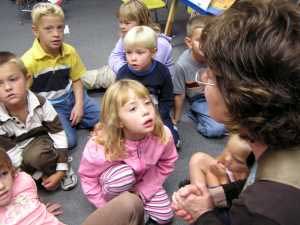
All this means is the way a leader rules is people is based on what he sees of them. If a leader sees that his people are greedy and they all want potatoes, he then has to rule them by splitting up the potatoes so they all get their potatoes. But if this was true and a whole village wanted their crop of potatoes, well, there wouldn't be enough of them so they'd all fight each other to get them. So leaders should also know how their followers will act. If a teacher is in a room with a bunch of tired and cranky kindergartners, the teacher knows that she needs to control them or else the whole situation will get out of hand. The teacher will need to provide relaxing and calming activities to calm the kids down. How a leader determines to rule his/her people is what the leader sees in their people.
I agree with this understanding, somewhat. I know those two parts just completely contradicted each other, but it's true. I know that a leader will rule their people in the way they think they need to (ahem, in order, cough, to control them, COUGH) rule them. But I don't agree with the fact that leaders rule in different ways. Human nature is human nature--it's everyone in the world, not just just a fraction. All leaders need to rule their people in the same way to insure that they don't kill each other (because they will). Take the potato example. Everyone wants the potatoes and the leader knows that, but how to stop it? One option is to equally distribute the potatoes, but who are we kidding? There would be some people in the crowd that would come back for seconds. Or, the leader could ban eating potatoes, which probably wouldn't go over well and the potato eaters would get mad and act upon the leader. OR, the leader could just keep all the potatoes for themselves. It could go either way. But anyway, I do see that leaders rule their people in what they see of them because it is the most successful way of ruling them. Leaders need complete control and by following and observing their people's actions, they will know their ways and can then rule them with knowing how they will act.
"The governed have a responsibility for their governance."
 |
| Addressing his Germans |
Ah, government. How unsuccessful you really are--in my point of view, but don't tell anyone I said that. This is wrong, the governed shouldn't have ANY responsibility for their governance. Why? Because it will ruin them. The governed
need a third party to equalize their actions. This understanding means that the people lead by a ruler or a decision maker have the responsibility (or the say, meaning they get to choose...) on how
or who governs them. This is what that brainless guy Locke thinks is true. A democracy. Democracies will never work. They will assume their power too boldly and take everything for themselves. Don't believe me? Take Adolf Hitler for an example. He was elected by the German democracy and look at the good he did for that country! He took WAY to much power into his control and ended up attacking most of Europe and that didn't really work out very well. The people had no control over him... so this understanding is clearly wrong. Democracies don't work. A monarchy is the best type of government because the ruler has control over the people, and he will rule fairly (well, as fairly as humanly possible) and comply to their follower's needs-as I mentioned above.
"Human Nature does not determine our actions; it inclines us towards certain actions."

Human nature insures that we are bad. Bad defined as greedy, selfish and egoistic. So this is saying that even though we are bad, our actions won't always be bad. We might be doing 'good deeds' if the situations presents itself, but even though we are doing good, we can't help but think bad thoughts. Because that is human nature. And again, I can't agree with this. It's wrong. Human nature dictates our actions. We are bad. We are selfish and greedy and if we are doing good deeds it's for the benefit of ourselves. When Macbeth thinks about killing Duncan, he doesn't want to (yes, unfortunately this does help Locke) BUT, he does kill him in the end. Macbeth realizes that if he killed Duncan, then he could be the King of Scotland. He was selfish and so he killed him and got himself a throne. Human nature greatly influences what humans think and do. Humans want everything for themselves and that's just the way it is.There are no thoughts that somehow creep into our mind and tell us bad thoughts, we think them. We make them up. The only reason Macbeth wasn't going to kill Duncan was because he was appalled with himself for even thinking those horrible thoughts. It was his brain, his thoughts. It's our brains and our thoughts. Human nature is in control, so just hold tight and go for the ride--it's instinct.

No comments:
Post a Comment